Your AI has the worst memory in the building
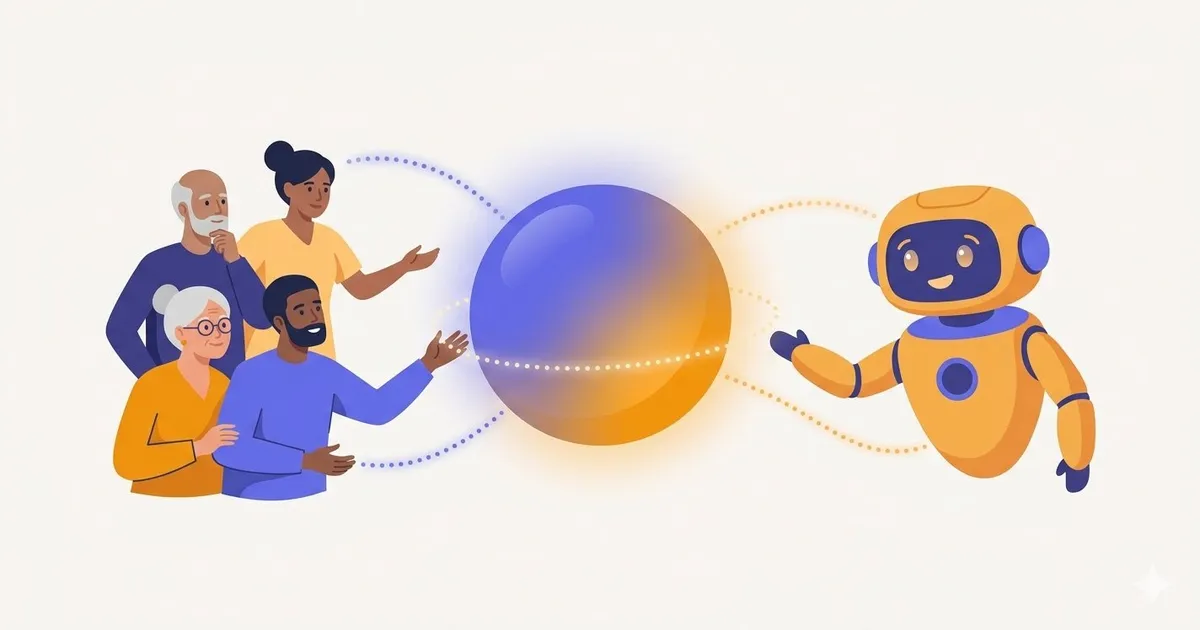
For decades we treated knowledge as something to store. Now that AI has joined the work, the cost of that mistake is finally visible.
For decades, the problem was always framed as storage. Where do we put things? Filing cabinets, then shared drives, then a wiki, then yet another folder in yet another app. Every generation of tools made it cheaper to keep more. None of them made it easier to remember.
And those are not the same thing.
Storage holds. Memory recalls. Storage is a box you put something in and hope to find later. Memory is the living thing that knows what connects to what, why a decision was made, what came before, and what it meant. A pile of documents in a drive is not memory — it's sediment. And it isn't only documents: the web links, the video walkthroughs, the recorded audio all settle into the same layer. The knowledge is technically "there," in the same way a word is technically in the dictionary when you can't remember it.
We learned to live with the gap. Everyone has felt it: the decision buried in a two-year-old chat thread, the file named final_v3_REAL.docx, the context that left when a colleague did. We called it disorganization and blamed ourselves. It was never a discipline problem. The tools were built to store, and we kept asking them to remember.
Then something changed the stakes.
AI showed up at work — and it is genuinely brilliant. It can reason, draft, summarize, and argue better than we expected. But it arrives knowing nothing about your world. It has read the entire internet and not one line of your project. So you paste in context, it produces something useful, and then — where does that go? Into the chat history. Into your Downloads folder. Into the same sediment as everything else. The most capable colleague you've ever had has the worst memory in the building. It forgets you the moment the tab closes.
So now there are two parties who need to remember the same things: your team, and the AI helping your team. And they need to remember them together. The decision a person makes today is context the AI needs tomorrow. The draft the AI produces tonight is something a person has to find on Monday. Two kinds of mind, one shared body of knowledge — and almost nothing built to hold it for both.
That's the real shift. The question stopped being where do we store this and became what remembers this — for everyone who needs it, human or not.
A shared memory like that has requirements that storage never did. It has to be structured, so meaning survives — not just files but web links, video and audio too, and above all the relationships between them. It has to be governed, because a memory everyone can quietly overwrite is one no one can trust. It has to persist and keep its history, because a memory that forgets why is just a newer pile. And it has to be reachable by both sides natively — a person opening it in a browser, an AI agent reading and writing through a protocol — or it isn't shared at all; it's just storage with extra steps.
None of this is a feature you bolt onto a tool. It's a layer underneath the work. The place the knowledge actually lives, that people and AI both draw on, and that outlasts any single tool, project, or person.
That layer is what we've been building, and we call it Sutram. We didn't set out to name a category. We set out to stop losing things — and kept discovering that the thing we were missing was never more storage. It was memory we could share.
The tools were never the problem. We just kept asking them to remember, and they were only ever built to hold.